


Mahjong Master Path to Harmony
3.957.00 Reviews
App Specs
- Version
- 1.1.1
- Updated On
- License
- Free
- Downloads
- 100,000+
- Developer
- Gimica GmbH
- Categories
- Casual
- Platform
- Android
Screenshots
 Analysis by AppCompare
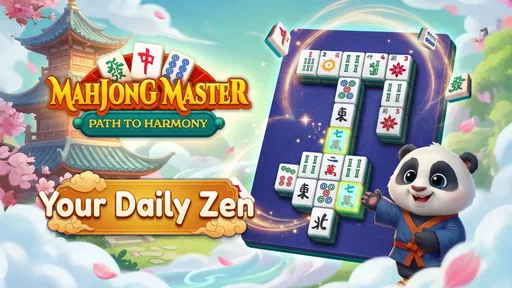
Mahjong Master Path to Harmony is the kind of casual game I reach for when I want a quiet break rather than a demanding challenge. Its central appeal is easy to understand: familiar Mahjong-style tile matching presented as a relaxing journey. After spending time with it, my view is that it works best as a gentle, low-pressure pastime for short sessions, especially if you enjoy visual sorting and steady progress more than competition or complex strategy.
That focus is also its main limitation. This is not the game I would suggest to someone looking for deep Mahjong rules, a serious head-to-head mode, or a constantly changing puzzle system. It is more comfortable than ambitious. For the right player, that is a strength; for everyone else, the calm pace may feel too restrained.
How the tile-matching experience feels in everyday play
The game belongs to the casual category, and that description fits its rhythm well. I can open it for a few minutes, clear some tiles, and put it down without needing to remember a complicated campaign or prepare for a long match. The Mahjong format gives each session a recognizable structure, while the adventure framing adds a sense of moving forward instead of simply repeating isolated boards.
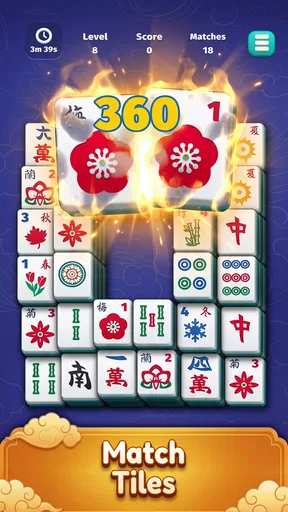
What I appreciate most is the way the basic activity encourages concentration without demanding all of my attention. Matching visible pairs requires me to scan the arrangement, notice which tiles are exposed, and think about what a move will reveal. That small amount of planning makes the game more engaging than a purely automatic matching exercise, but it remains approachable enough for a relaxed evening.
In practical terms, I see it fitting naturally into the gaps of an ordinary day. I might play while waiting for an appointment, during a short commute as a passenger, or after dinner when I want something quieter than an action game. The experience does not ask me to become highly invested before it becomes enjoyable. That low entry barrier is one of its clearest advantages.
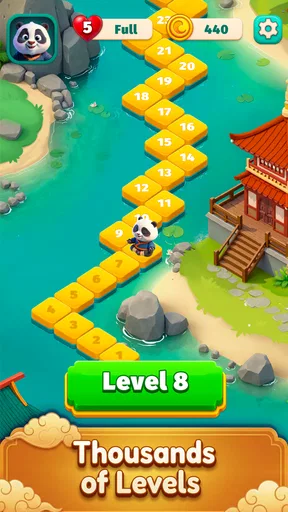
The “adventure” element matters because it gives individual puzzles a broader context. Even when the immediate task is simply finding useful pairs, the feeling of progressing through a path makes the activity less disposable. I found that helpful on days when I wanted a small sense of completion. Finishing a board can provide a neat stopping point, which is preferable to games that keep pushing me toward one more round.
Still, players should understand what kind of Mahjong this is. It is aimed at tile matching rather than teaching or simulating the traditional four-player Mahjong game with its detailed rules, scoring, and table tactics. If you are searching for that specific experience, this title will not replace a dedicated traditional Mahjong app. Its appeal is closer to a solo puzzle journey built around Mahjong imagery and familiar matching logic.
Worth Reading Before You Choose

EA SPORTS FC Mobile 26 Is a Bigger Football Game, but It Takes Time

Flipboard Shows What News Apps Must Do Beyond the Feed

Switching to Android Auto Means Rethinking Your Driving Routine

Google Calendar Makes a Crowded Week Easier to Manage

Ludo King Makes the Most of the Minutes Between Plans

Baby Panda World Brings Quick Play to Modern Phones, but Its Game Library Feels Busy
A calm format that rewards looking ahead
The most useful habit I developed while playing was to avoid taking the first available pair automatically. A pair may be legal now but strategically unhelpful if it removes a tile that is supporting several future choices. I get better results when I first scan the whole layout, identify blocked areas, and then choose a move that opens more options.
That approach creates a pleasant middle ground between relaxation and thought. I am not under the pressure of a competitive opponent, yet I still have reasons to pause before tapping. The game therefore suits people who enjoy visual puzzles where the satisfaction comes from gradually making a crowded arrangement easier to read.
It also makes the title more suitable for players who prefer predictable rules. Once the matching logic is clear, the challenge comes from the board rather than from learning a large collection of special abilities or systems. I found that reassuring when I wanted a game I could return to after a break without studying a tutorial again.
There is a trade-off here. Predictability can become repetition if the player wants constant novelty. The same basic interaction remains at the center of the experience, so enjoyment depends heavily on whether you like refining your choices within a familiar structure. I would not call that a flaw in itself, but it is an important part of deciding whether the game belongs on your phone or tablet.
Where the game is strongest
Its greatest strength is accessibility. The store lists it for Everyone, and that matches my impression of its broad, non-aggressive presentation. Someone who rarely plays games can understand the basic goal quickly, while a regular puzzle player can still find satisfaction in planning a cleaner sequence of moves.
The free entry point also lowers the risk of trying it. I can sample the core experience without committing money in advance, which is valuable for a casual title whose appeal depends on personal tolerance for repetition. The game includes optional in-app purchases ranging from $2.49 to $46.99 per item, so I would approach spending carefully and decide first whether the unhurried puzzle loop is genuinely enjoyable for me.
That price range is worth keeping in mind because a free download does not automatically mean the complete experience will feel equally comfortable for every player. My advice is to treat purchases as optional conveniences rather than part of the reason to install the game. If progress ever feels slower than I want, I would first change my play routine, take breaks, and focus on improving board choices instead of paying immediately.
Another positive is the modest technical threshold. The game supports Android 7.0 and later, which means it is not restricted to only recent devices. For someone using an older Android phone that still performs well for everyday apps, this makes the title more approachable than many newer games with demanding requirements.
The current version is 1.1.1, and the developer is Gimica GmbH. Those details are useful when checking compatibility or making sure the intended title is installed, particularly because Mahjong-style games can have very similar names. I would look for the exact wording rather than relying only on a general search for Mahjong games.
The small decisions that improve a session
I found three practical habits especially useful. First, I inspect the board before making a match. This prevents the common mistake of removing an easy pair that leaves the most important tiles buried. Second, I try to prioritize moves that expose new tiles, because opening the layout usually creates more useful choices than clearing a pair that changes nothing else.
Third, I treat a difficult board as a reason to slow down rather than tap faster. When several pairs look similar, I compare what each removal will uncover. This turns the game into a compact exercise in managing future options. It is a simple technique, but it makes the experience feel more deliberate and gives me a better chance of finishing without relying on repeated random attempts.
These habits are also why I think the game can work as a short mental reset. It occupies my attention enough to interrupt a stressful train of thought, but it does not require the emotional energy of a competitive match. I would not present it as a substitute for rest or exercise, of course, but as a five-minute focus activity it has a clear place.
A realistic example is an evening when I have finished work but am not ready to watch a full program. I can play one board, use the pause between decisions to settle down, and stop after a natural point. A fast arcade game might leave me more stimulated, while a large role-playing game would ask for more commitment than I want. This title sits comfortably between those two extremes.
The meaningful weakness: relaxation can become sameness
The same calm design that makes the game approachable may disappoint players who need strong variety. The core action is intentionally narrow, and the adventure framing does not change the fact that most of my attention remains on matching tiles. If I am in the mood for dramatic progression, elaborate character systems, or a demanding puzzle curve, I will probably find better choices elsewhere.
I also would not choose it as my main game for social play. Its appeal is personal and self-paced, so it lacks the tension that comes from competing with another person or cooperating toward a shared objective. Traditional Mahjong enthusiasts may likewise prefer an app built around actual table rules, because this experience is designed around solo tile clearing rather than a complete multiplayer match.
The purchase structure is another point where I would stay alert. The game is free, but the available items extend from a small amount to a considerably larger one. That does not make the title unsuitable, yet it does mean I would avoid treating optional purchases as a solution to every moment of friction. Players who prefer a single upfront price may feel more comfortable with a paid puzzle game that removes this kind of decision.
There is also a personal limitation: I can enjoy the game most when I set a modest session goal. If I keep playing for too long, the repeated matching pattern becomes less absorbing. That is not unusual for a casual puzzle, but it means the title benefits from being used as a break rather than as an all-day activity. Its design feels more successful in small portions.
Who should install it, and who should skip it
I would recommend it to someone who likes Mahjong-inspired puzzles, orderly visual tasks, and games that can be understood almost immediately. It is particularly suitable for players who want a peaceful solo activity, older Android users who meet the operating-system requirement, and anyone who prefers gradual progress over fast reactions.
It is also a good candidate for people who enjoy improving their own decision-making. The useful challenge is not speed; it is recognizing which pair creates the best next position. If you like looking for patterns, clearing clutter, and ending a session with a tidy board, the format has a satisfying logic.
I would be more hesitant to recommend it to players who want authentic traditional Mahjong, competitive matchmaking, or a large amount of mechanical variety. Those users should look for a dedicated multiplayer Mahjong table or a deeper strategy puzzle instead. Likewise, anyone who dislikes optional purchases in free games should examine the spending experience carefully and keep notifications or purchase prompts from shaping the way they play.
The rating gives the game a useful but not overwhelming signal: it holds a 4.0 average from around 315 ratings, with roughly 56 written reviews. I read that as evidence of a generally positive reception rather than a guarantee that every player will enjoy the same pace. Its reach is also meaningful, with over 100K installs, suggesting that the accessible Mahjong format has found an audience without making the game automatically right for every puzzle fan.
Because it is free and rated for Everyone, trying it is relatively straightforward for the intended audience. My practical suggestion is to play several short sessions before deciding whether it deserves a permanent place on your device. Pay attention to whether the board-planning feels satisfying or merely repetitive; that answer matters more than the broad promise of a relaxing adventure.
My final verdict
After weighing the experience, I see Mahjong Master Path to Harmony as a focused casual game with a clear identity. It succeeds when I want quiet concentration, simple rules, and a small feeling of progress. The tile layouts give the relaxation some substance, because good play involves thinking ahead rather than matching without consequence.
Its weaknesses are equally clear. The format may feel repetitive during long sessions, it is not a replacement for traditional multiplayer Mahjong, and the optional purchase range means I would play with a budget in mind. Players seeking action, social competition, or a constantly expanding set of systems should choose a different kind of game.
For me, the right recommendation is conditional but positive: install it if you want a gentle solo puzzle for spare moments and enjoy the visual satisfaction of opening a board carefully. Keep sessions short, scan before every move, and do not confuse the adventure presentation with a deep role-playing campaign. Used on those terms, it is a pleasant companion for quiet breaks rather than a game that tries to dominate my free time.
My verdict: a worthwhile free Mahjong-inspired pastime for patient players, best enjoyed as a calm daily ritual rather than an endlessly varied main game.
Pros
- Relaxing tile-matching gameplay suited to short or long sessions.
- Progressive levels provide a steady sense of achievement.
- Simple controls make it accessible for beginners.
- A peaceful theme creates a calming alternative to fast-paced games.
- Offline play may be convenient when traveling or away from Wi-Fi.
Cons
- Difficulty can feel uneven across some puzzle stages.
- Repetitive mechanics may lose appeal during extended sessions.
- Limited strategic depth compared with traditional Mahjong games.
- Some content or features may require in-app purchases.
- Ads can interrupt the experience for players using the free version.
FAQs for Mahjong Master Path to Harmony
What is Mahjong Master: Path to Harmony?
Mahjong Master: Path to Harmony is a relaxing tile-matching puzzle game built around traditional mahjong-inspired layouts. Players clear the board by finding and matching identical, free tiles while progressing through themed levels. The game combines calm visuals, gentle music, and gradually more challenging arrangements, making it suitable for short sessions, casual play, or anyone who enjoys thoughtful puzzle games without fast reflex requirements.
How do you play Mahjong Master: Path to Harmony?
The main objective is to remove all tiles from each layout by pairing matching tiles that are available for selection. A tile is generally playable when it is not blocked by another tile and has an open side. You need to plan several moves ahead because removing one pair can reveal useful combinations or leave important tiles trapped. Completing boards successfully allows you to continue through additional stages and challenges.
Is Mahjong Master: Path to Harmony free to download and play?
Mahjong Master: Path to Harmony can generally be downloaded at no initial cost, although the exact availability and payment model may vary by platform and region. Free versions of this type of game commonly include optional advertisements, rewarded videos, or in-app purchases for boosters and other conveniences. Before downloading, it is worth checking the store listing for current pricing, purchase details, and any age-related information.
Does the game require an internet connection?
Many tile-matching games can be played offline after installation, and Mahjong Master: Path to Harmony is designed primarily as a self-contained puzzle experience. However, an internet connection may still be needed for advertisements, optional rewards, updates, cloud-related features, or restoring purchases. If offline play is important to you, test the game in airplane mode after downloading and check whether all desired features remain available.
Is Mahjong Master: Path to Harmony suitable for beginners?
Yes, the game is generally approachable for beginners because its core rule is easy to understand: match identical tiles and clear the board. The early stages provide a gentle introduction before layouts become more complicated and require stronger planning. Players who are unfamiliar with mahjong-style puzzles may need a little time to recognize tile designs, but the relaxed pace makes learning less intimidating than many timed puzzle games.


